Sustainable Yoga Gear in India: Eco-Friendly Mats, Clothing and Accessories Worth Considering
Key Takeaways
- This article covers actionable guidance from Absolute Yoga's certified instructors.
- Topics include yoga practice, breathwork (pranayama), flexibility, mindfulness, and stress relief.
- Suitable for beginners and regular practitioners seeking structured yoga in Bangalore.
- Absolute Yoga offers in-studio, online, and aerial yoga classes from HRBR Layout, Kalyan Nagar.
Yoga is rooted in Ahimsa, or non-harming. It applies to how we treat other beings, how we treat ourselves, and how we interact with the planet. Yet the wellness industry produces large amounts of waste through synthetic mats, petroleum-based fabrics, disposable products, and excessive packaging.
For practitioners who want their consumer choices to reflect those values, there are now more sustainable yoga gear options available in India. The key is not to replace everything you own. It is to understand which materials are genuinely useful, which claims deserve closer attention, and when buying less is the more sustainable choice.
This guide covers practical options across yoga mats, clothing and accessories, with guidance on materials, durability, certifications, cost, and availability.
Why Conventional Yoga Gear Has a Sustainability Problem
Many affordable yoga mats are made from PVC, or polyvinyl chloride. PVC is a plastic material and can involve additives and emissions during manufacturing. It is also difficult to recycle through ordinary household waste systems, which makes end-of-life disposal an important consideration.
Conventional yoga clothing is often made from polyester and nylon. These synthetic fibres are derived from fossil-based feedstocks and can release microfibres during washing. The environmental impact depends on the fibre, manufacturing process, garment lifespan, washing habits, and disposal route, so the most useful comparison is not simply 'natural versus synthetic'.
A more practical approach is to look at the full life of a product: what it is made from, how long it is likely to last, whether credible certification supports its claims, how often you will use it, and what happens when you no longer need it.
Sustainable Yoga Mats in India
Natural Rubber Mats
Natural rubber is one of the most accessible alternatives to a conventional PVC mat. It is derived from rubber trees and can provide strong grip and a more substantial feel underfoot. It is not suitable for people with latex allergies, so check the manufacturer's material information carefully.
When shopping, look specifically for clear material descriptions such as natural rubber or latex rubber rather than relying on a generic 'eco-friendly' label. Also check whether the mat has additional synthetic layers or coatings, because the sustainability profile of the finished product depends on the complete construction.
Indian brands such as Boldfit, Strauss, and Wiselife have offered natural-rubber options, while international brands such as Jade Yoga are also available to Indian buyers. Prices vary significantly by size, thickness, construction, and seller, so compare the material specification rather than choosing only by price.
Cork Yoga Mats
Cork is harvested from the bark of cork oak trees without requiring the tree itself to be cut down. It is renewable and has a distinctive natural texture. Cork mats are particularly interesting for practitioners who want a firm surface and good grip, although the backing material still matters.
Many cork mats use natural rubber underneath the cork layer for cushioning and stability. When comparing products, check both the cork surface and the backing material rather than assuming that a cork top means the entire mat is made from cork.
Jute and Cotton Mats
Jute and cotton mats are plant-fibre alternatives that can suit classical, gentle, and therapeutic practices. They tend to offer less cushioning than thicker rubber or foam-based mats, so they may not be the right choice for every practitioner or every floor. Our Yoga Accessories Guide also covers the basics of choosing yoga equipment without overspending.
Sustainable Yoga Clothing in India
Organic Cotton
Organic cotton can be a good option for gentle and moderate yoga practice because it is breathable, comfortable, and plant-based. If sustainability claims matter to you, look for credible certification rather than relying only on words such as 'natural' or 'eco-friendly'.
For example, the Global Organic Textile Standard, or GOTS, covers organic fibres as well as processing and certification requirements across the textile supply chain. You can learn more about the current standard directly from the Global Organic Textile Standard.
Recycled Polyester (rPET)
Recycled polyester, commonly called rPET, is made using recycled plastic inputs. It can reduce demand for virgin polyester and make use of existing plastic material, although it remains a synthetic fibre and can still shed microfibres during washing.
For practitioners who need moisture management for dynamic practice, recycled polyester can be a practical compromise. Look for specific recycled-content claims and credible certification rather than treating any garment described as 'recycled' as automatically sustainable.
Textile Exchange maintains standards including the Global Recycled Standard, which addresses recycled content, traceability, processing, social requirements, environmental practices, and chemical restrictions. Its Global Recycled Standard information is a useful reference when evaluating recycled-material claims.
Bamboo Fabric
Bamboo is a fast-growing plant, but the sustainability story depends heavily on how the fibre is processed. Bamboo-derived fabrics can feel soft and breathable, but 'bamboo' on a label does not automatically mean a low-impact textile.
If you are considering bamboo clothing for yoga, look for clear information about the actual fibre, such as bamboo lyocell, and check whether the manufacturer provides meaningful information about processing and certification. Be cautious about broad environmental claims that do not explain the manufacturing process.
Sustainable Yoga Accessories
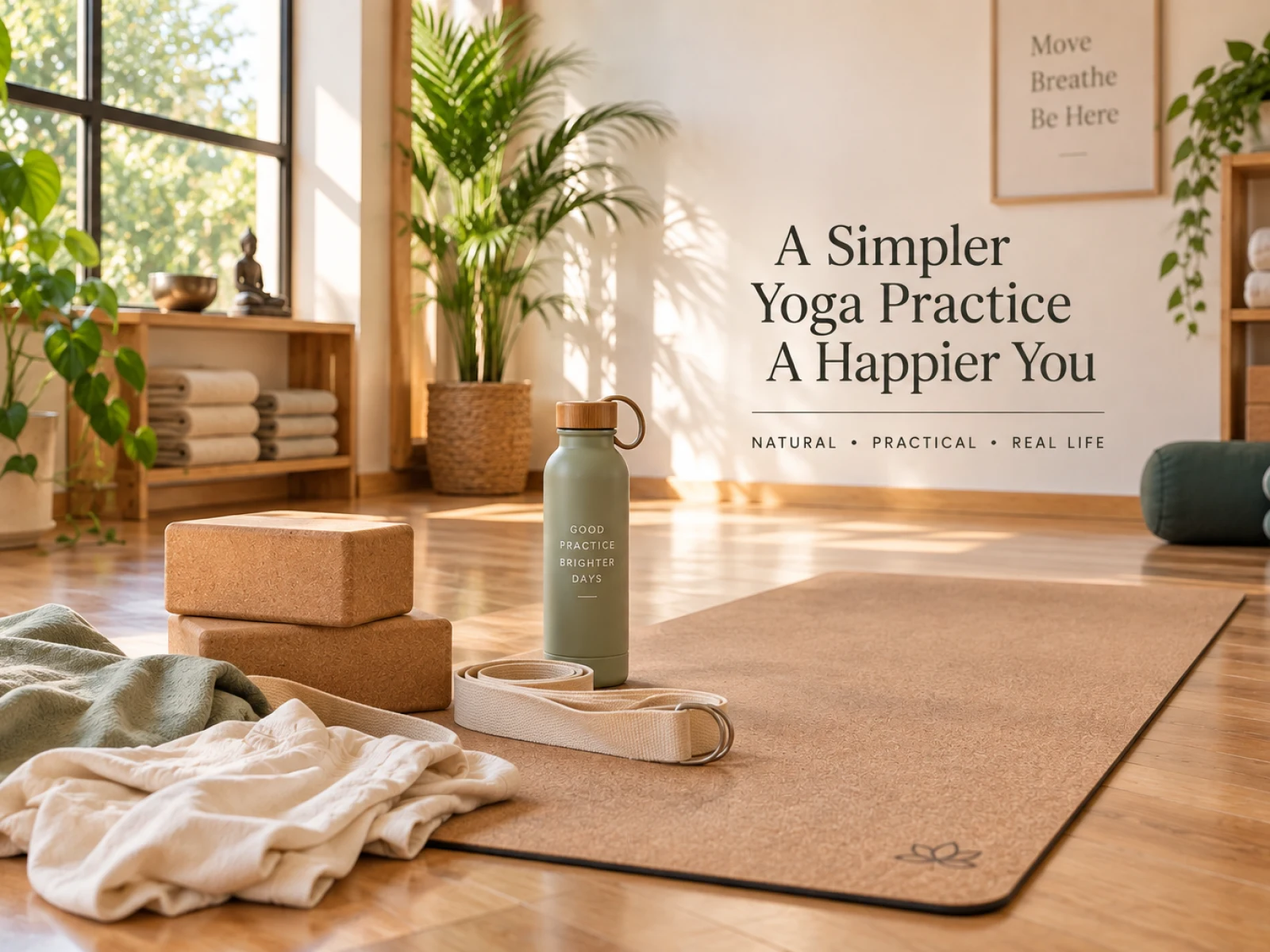
Cork yoga blocks are a durable alternative to foam blocks. They are firm and stable, which can be particularly useful for alignment-focused practice. Prices in India vary by brand and size.
Cotton or hemp yoga straps are straightforward alternatives to synthetic straps. Choose one that is strong, comfortable to handle, and built to last.
For bolsters, look at the filling as well as the outer fabric. Natural fillings such as kapok or buckwheat hulls can be alternatives to synthetic foam, although they may feel and behave differently. Choose based on how you intend to use the bolster, especially for restorative or therapeutic practice.
If you are new to using props, our guide to Yoga Props Explained covers blocks, straps, bolsters, wheels, chairs, blankets, ropes, and even the wall as a yoga prop.
The Case for Longevity Over Constant Upgrading
The most sustainable yoga gear choice is often the simplest one: buy well, use it for a long time, and replace it only when necessary. A durable mat that remains functional for many years can be a better choice than repeatedly buying cheaper mats that need frequent replacement.
The same principle applies to clothing. A smaller wardrobe of comfortable, well-made pieces that you wear regularly can be more sensible than continually buying new products because of trends or marketing.
Before replacing something, ask three questions: Does it still work? Can it be repaired or cleaned? Can I continue using it for another year? Extending the life of what you already own is often the easiest sustainability decision.
Sustainable Practice Starts with the Practice Itself
Sustainability is not only about buying a different mat. It is also about buying less, using what you already own for longer, choosing products with transparent material information, and supporting businesses that make specific and verifiable claims.
Beyond gear choices, walking or cycling to your yoga studio when practical, choosing locally made products where quality and transparency are strong, washing synthetic clothing thoughtfully, and extending the life of your equipment can all contribute to a lower-impact practice.
At Absolute Yoga in HRBR Layout, Kalyan Nagar, we have maintained a simple, clean studio environment since 2016, focused on practice rather than commercial clutter. You can learn more about our approach to yoga and our studio on the Absolute Yoga home page.
Want to Practise Before Buying More Gear?
You do not need to build a complete collection of sustainable yoga equipment before starting. At Absolute Yoga, the studio provides the props needed for your classes, so you can experience the practice first and decide what you genuinely need for home use.
If you prefer practising from home, you can also explore our live online yoga classes, where you can build a consistent practice without buying a large collection of equipment.
Book a trial class at absoluteyoga.in or WhatsApp +91 80955 10108.