Yoga Accessories You Actually Need vs Things You Don't: A Practical Guide for Bangalore Yoga Students
Key Takeaways
- This article covers actionable guidance from Absolute Yoga's certified instructors.
- Topics include yoga practice, breathwork (pranayama), flexibility, mindfulness, and stress relief.
- Suitable for beginners and regular practitioners seeking structured yoga in Bangalore.
- Absolute Yoga offers in-studio, online, and aerial yoga classes from HRBR Layout, Kalyan Nagar.
The wellness industry is excellent at selling things. A quick search for yoga accessories surfaces dozens of products, from special socks and alignment wheels to microfibre towels, scented sprays, colour-coded strap systems, and subscription boxes. It can feel like you need an equipment budget before you even step onto the mat.
You do not. This guide separates what genuinely improves your yoga practice from what is optional or unnecessary. It is written from the perspective of teachers and students who have been practising yoga classes in Bangalore since 2016.
The Essentials: What You Actually Need
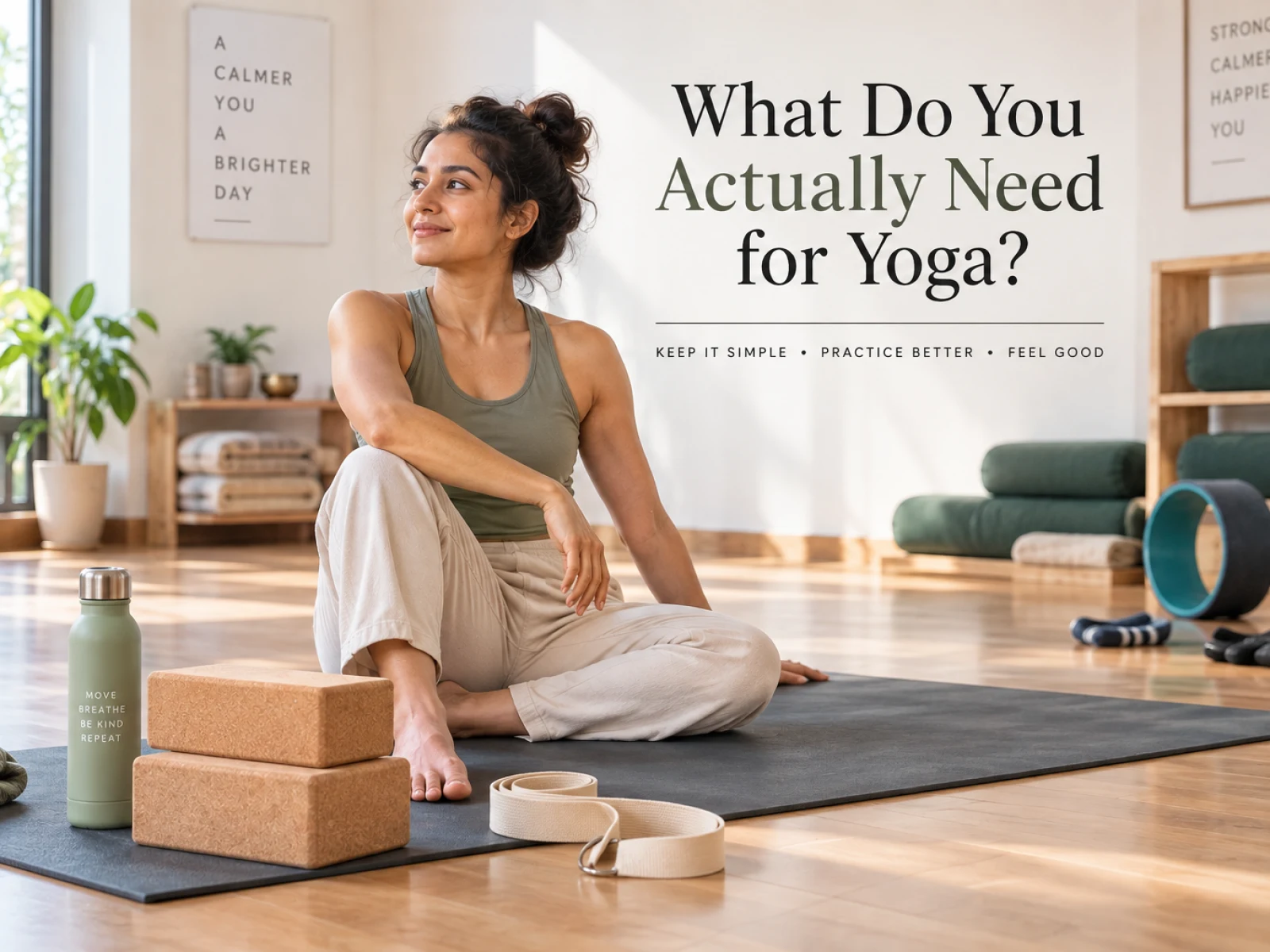
1. A Good Quality Yoga Mat
This is the one non-negotiable. A mat that slips, bunches, or deteriorates quickly affects your safety and confidence in poses. A 4mm mat in PVC, TPE, or natural rubber is appropriate for many yoga styles, including Hatha, Vinyasa, and general fitness yoga classes. Budget: â¹600 to â¹2,500 for a good entry-to-mid level mat. See our complete yoga mat guide for detailed material and thickness guidance.
2. Comfortable Clothing That Allows Movement
You do not need to spend â¹5,000 on branded yoga leggings. What you need is clothing that moves with your body without restricting circulation or riding up during poses. Fitted leggings or joggers with a stretchy waistband, a fitted top that stays in place during forward folds, and lightweight, breathable fabric are all you need.
When choosing fabric, cotton and bamboo are good options because they are comfortable, breathable, and suitable for regular practice. Choose clothing that feels comfortable on your skin and allows you to move freely rather than choosing it based only on the brand or price.
3. One or Two Yoga Blocks
Yoga blocks are among the most underused and underrated props in yoga. They extend your reach in forward folds, support correct pelvic alignment in seated poses, and make dozens of poses more accessible at every level. A foam block costs â¹200 to â¹400 and can last for years. Buy two if your budget allows. Many poses are better supported with a block under each hand.
4. A Yoga Strap
A strap extends your effective reach in poses where hamstring or shoulder tightness currently prevents proper alignment. Cotton straps with a D-ring buckle cost â¹200 to â¹500. Invest in one once you have established a home practice. It can immediately improve your work in seated forward folds, reclining leg stretches, and shoulder openers.
5. A Water Bottle
Hydration before and after yoga is important, particularly during Bangalore's warmer months. Any good reusable bottle works. Avoid drinking large amounts during practice, especially during pranayama sequences.
Nice to Have: Worth It for Consistent Practitioners
A Yoga Towel
A microfibre yoga towel placed over your mat can be useful when damp, particularly if you sweat heavily during dynamic yoga classes. It is not essential for beginners. Consider one once you are practising three or more times per week.
A Bolster
If you practise restorative yoga or yoga nidra regularly at home, a bolster enables deeper supported poses that blankets and cushions do not replicate well. A round foam bolster costs â¹800 to â¹1,500.
Things You Do Not Need
Yoga Socks and Gloves
Unless you have a medical reason for foot coverage, yoga socks add an unnecessary layer between your foot and the mat. Direct contact can support grip and proprioception. Yoga gloves can also interfere with the tactile feedback that helps with hand placement.
Expensive Branded Yoga Pants Initially
Premium brands make excellent products. They can also cost several times more than equally functional alternatives. For your first three months of yoga, a comfortable mid-range option is enough. Once you know you will continue practising consistently, you can upgrade if quality genuinely matters to you.
A Yoga Wheel Unless You Are Advanced
Yoga wheels can be useful for experienced practitioners working on backbends and spinal mobility. For beginners and many intermediate students, they are rarely necessary. Wait until your practice calls for one and your teacher suggests an appropriate use.
Yoga App Subscriptions Initially
Joining live yoga classes in Bangalore or live online yoga classes can provide real-time correction, the energy of a group, and guidance from a teacher who can observe your practice. Apps can become useful supplements once you have an established practice.
The Real Cost of Getting Started
A mat (â¹800 to â¹1,500) + two blocks (â¹600 to â¹800) + a strap (â¹300) + comfortable clothing you likely already own can bring your initial equipment spend to roughly â¹1,700 to â¹2,600. That is enough to start a solid home practice. Everything beyond that is optional.
But here is another way to think about the money. Instead of spending heavily on accessories you may not need, that money can be better spent on learning yoga properly at a good studio with experienced teachers. Guidance, corrections, consistency, and a structured practice can have a much greater impact than buying more equipment.
At Absolute Yoga, you can start your yoga practice for as little as â¹1,790 per month. We also offer a credit card EMI option to help ease the financial burden and make regular yoga practice more accessible. You can start with the essentials, learn under proper guidance, and invest in additional equipment only when your practice actually calls for it.
Trying Yoga Without the Investment
If you are not yet sure yoga is for you, there is no need to buy anything first. When you attend yoga classes in Bangalore at Absolute Yoga in HRBR Layout, Kalyan Nagar, all necessary props are provided in the studio. You only need to bring comfortable clothing and a water bottle.
We offer a free trial class for new students across our morning and evening batches. Book at absoluteyoga.in or WhatsApp +91 80955 10108.
Final Thoughts
The best yoga accessory is not a product. It is consistency. Showing up to yoga classes regularly, paying attention to your teachers, and practising with honest effort will do more for your yoga than any equipment purchase.
Start minimal, add deliberately, and let your practice guide your investments. Spend your money where it actually improves your practice, rather than feeling pressured to buy everything marketed as a yoga essential.