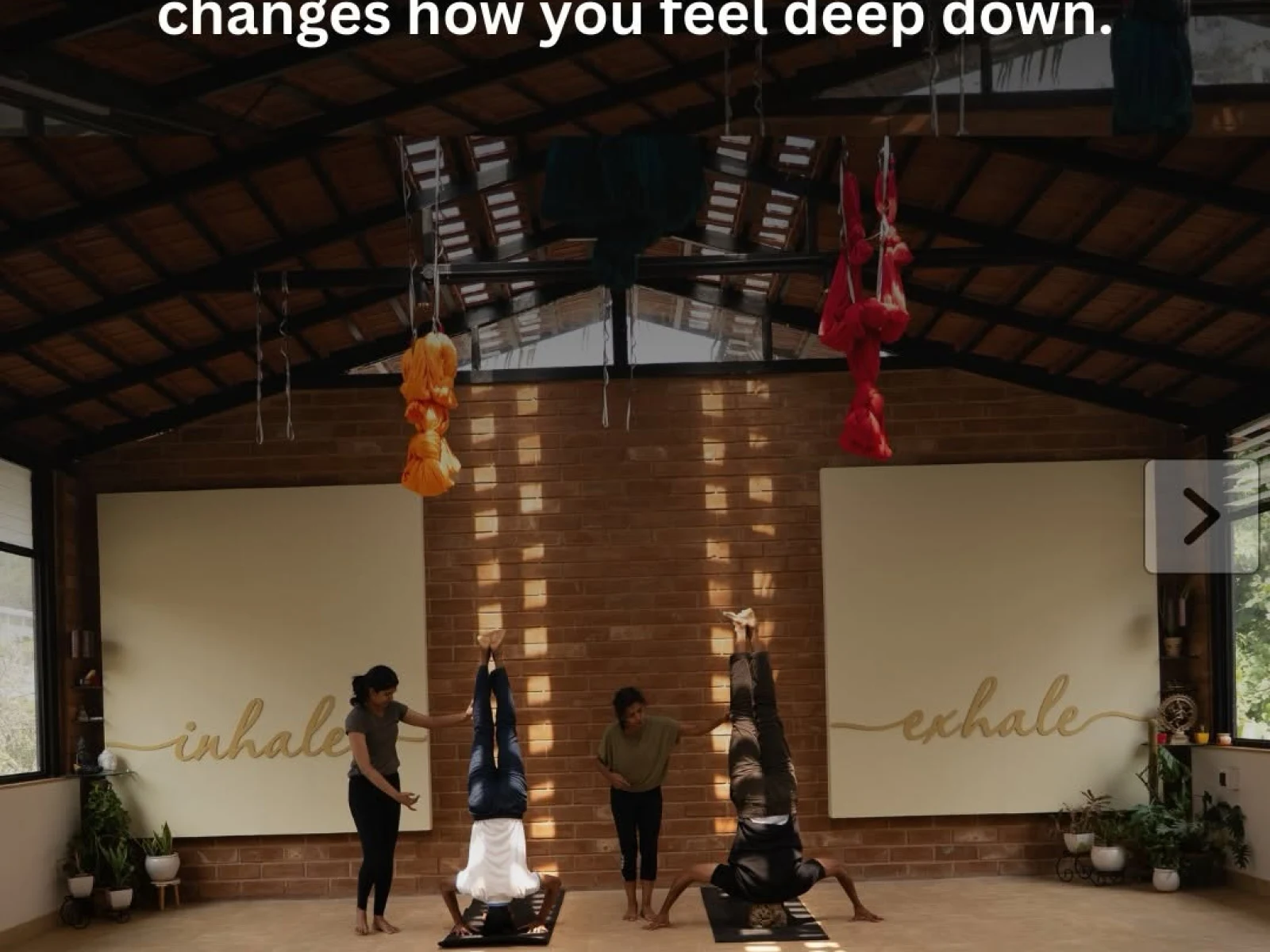
Yoga for Beginners in Bangalore: What to Expect in Your First Class
Key Takeaways
- This article covers actionable guidance from Absolute Yoga's certified instructors.
- Topics include yoga practice, breathwork (pranayama), flexibility, mindfulness, and stress relief.
- Suitable for beginners and regular practitioners seeking structured yoga in Bangalore.
- Absolute Yoga offers in-studio, online, and aerial yoga classes from HRBR Layout, Kalyan Nagar.
Quick answer
Starting yoga often comes with a surprising amount of uncertainty. You may wonder whether you are flexible enough, whether the class will be too difficult, what to wear, or whether everyone else will already know what to do. If you are searching for yoga for beginners in Bangalore, the first goal is not to find the most advanced-looking studio. It is to find instruction that meets you where you are and a routine you can realistically maintain.
You do not need to be flexible before starting
Flexibility is not a prerequisite for yoga. Beginners arrive with different levels of mobility, strength, balance, confidence and previous exercise experience. A suitable class teaches foundations and offers options rather than expecting everyone to make the same shape. Do not use another studentâs range of motion as your benchmark. Body proportions, past activity, injuries, age and day-to-day energy influence how a movement feels. A position that looks simple may be challenging for one person and comfortable for another. Your first session is a learning experience: you are discovering how instructions work, how your body responds and which parts of the practice need more time. You do not need to master poses or memorise terminology before returning.
What happens during a typical beginner class?
Class structure varies, but a well-organised session usually has a clear beginning, middle and end. It may start with settling and awareness, move into gentle warm-up and mobility, introduce foundational postures, and finish with breathing or relaxation. Listen for instructions about hand and foot placement, distributing weight, breathing naturally and knowing when to stop. If an instruction is unclear, ask. It is better to pause and understand than to imitate a shape without knowing how to enter or leave it. Beginner-friendly does not necessarily mean effortless. Some foundational movements challenge balance, coordination or muscles you rarely use. The difference is that a good teacher explains the movement and offers suitable alternatives.
How to choose a beginner yoga class in Bangalore
Start with logistics. Find a studio or online class that fits your schedule, travel time and budget. A class you can attend consistently is often more useful than an impressive option you can rarely reach. If you search for yoga classes near me, check the actual commute at the time you plan to attend. Ask whether the batch is dedicated to beginners or mixed-level, how large it is, whether questions are welcome and how modifications are taught. Absolute Yoga is based in HRBR Layout, Kalyan Nagar, Bengaluru, and offers in-studio and live online formats. Check Absolute Yoga in-studio class information and Absolute Yoga online yoga classes to confirm current format and timings.
Hatha, Ashtanga and other styles
Yoga styles can sound confusing when you are starting. Some classes move through sequences with a steady rhythm; others focus more on foundational postures, alignment, sustained holds, breathwork or relaxation. Names alone do not always tell you how challenging a class will feel, because teaching style and class design vary. If you want a slower introduction, ask what the teacher means by beginner-friendly and whether the class includes detailed explanations. If you are interested in a more structured or physically demanding sequence, ask what experience is recommended. Explore Hatha versus Ashtanga yoga guide. The right starting style is one you can learn from and attend safely. You can explore other formats later.
What to wear and bring
Comfort matters more than appearance. Choose clothing that lets you sit, stand, bend and reach without slipping or restricting movement. You do not need branded clothing, special socks or a large collection of equipment to begin. Ask the studio whether mats and props are provided. If you practise online, clear enough floor space to extend your arms and legs without hitting furniture. Position your device so you can hear the teacher and, where possible, be seen during the session if the class uses visual feedback. Arrive a few minutes early for an in-person class. Tell the instructor that you are new and ask where to place your belongings.
How often should you practise?
The best schedule is the one you can repeat. Starting with a manageable number of classes each week is often more sustainable than committing to a demanding routine and feeling behind when life gets busy. Your ideal frequency depends on class intensity, other physical activity, recovery, health and available time. Think in terms of a habit rather than a short challenge. Choose specific days and times, decide how you will travel or set up at home, and make the first step easy. If you miss a class, return to the routine rather than treating the week as a failure. The World Health Organizationâs physical activity guidelines at WHO physical activity guidelines provide broader public-health guidance about movement across the week, not an individual prescription for a yoga schedule.
What if you cannot follow the poses?
Expect some unfamiliarity. You may not understand a name, know which side to move first or feel steady in a balance. These are ordinary parts of learning. Watch the teacherâs demonstration, listen for the key instruction and choose a simpler option when one is offered. A modification is not a shortcut or a sign that you are failing. It is a way to practise the intended movement within your current capacity. Do not force a joint into a position, hold your breath to complete a pose, or ignore sharp pain because others appear comfortable. If the class moves too quickly for you to understand the instructions, speak to the teacher after class and ask whether another batch is a better fit.
How to make online yoga work at home
Online yoga can be useful if travel is difficult or you prefer to practise at home. Before class, choose a clear space, check the device angle and sound, and remove objects that could obstruct movement. Live online classes differ from recordings because the teacher may be able to respond to questions or observe your movement, depending on the platform and camera setup. Ask whether the teacher can see you and how to request help. If you have a health condition or injury, discuss modifications before class. Do not attempt advanced poses because a video makes them look easy. If a movement is unfamiliar, choose a simpler variation or wait until you can receive appropriate instruction.
What yoga can and cannot promise
Yoga may support general wellbeing, stress management, sleep, balance and some aspects of physical function. Evidence varies by condition and by the type of yoga studied. It is not accurate to promise that yoga will cure a disease, eliminate all pain, correct every posture problem or produce a specific result by a fixed date. The National Center for Complementary and Integrative Health summarises evidence and safety considerations at NCCIH yoga evidence and safety guidance. It notes that yoga is generally considered safe for healthy people when practised properly under qualified guidance, while injuries can occur. If you are practising because of a health concern, do not use yoga as a reason to delay medical assessment or stop prescribed treatment.
How to know whether a class is a good fit
After your first session, consider whether the teacher explained movements clearly, offered alternatives, welcomed questions and respected boundaries. Think about the room, travel time and timing too. Do not judge the class only by how tired you feel. A gentle class may be exactly what you need to learn the foundations. A challenging class is not necessarily a better class for a beginner. Before purchasing a membership, check the number of classes, expiry date, missed-class policy, cancellation terms and whether the plan fits your likely attendance. Use yoga class fee comparison guide to think through the details.
A realistic first-month plan
Week one is about orientation: attend a suitable class, learn the studio routine or online setup, and identify questions. Week two is about repetition: return to the same class if it works and notice which instructions feel more familiar. Week three is a chance to discuss modifications or ask about the next step. Week four is a good time to review whether the schedule is realistic. Keep the plan flexible. If you feel unusually fatigued, unwell or uncomfortable, adjust your activity and seek advice when appropriate. At the end of the month, assess the routine honestly. Are you attending often enough to learn? Is the class accessible? Do you feel respected? Are fees and travel manageable? Changing the time, format or studio is a practical adjustment, not a personal failure.
Common beginner mistakes you can avoid
Trying to do everything perfectly is a common way to make the first few classes harder than necessary. You do not need to memorise pose names, copy the most flexible student or turn every session into a personal test. Listen for the main instruction, move at a manageable pace and ask for a modification when needed. Another mistake is holding your breath or pushing through sharp pain because you think effort is always productive. Effort and strain are not the same thing. Pause when something feels wrong and ask the teacher what to change. Beginners can also overcommit by booking too many classes in the first week. Start with a schedule you can maintain alongside work, sleep and other responsibilities. A routine that grows gradually is more likely to last than a demanding plan that becomes a source of guilt.
How to measure progress without chasing dramatic results
Progress in yoga is not limited to touching your toes or performing an advanced posture. You might notice that instructions are easier to follow, you feel more comfortable asking questions, balance becomes less distracting, or you can settle into a familiar sequence with less uncertainty. These changes may be gradual and will not appear at the same rate for everyone. A simple note after class can help: what felt familiar, what felt challenging, and what question do you want to ask next time? Avoid treating discomfort as proof that a class was effective or soreness as the only measure of effort. Your experience may vary with sleep, stress, activity and health. If your goal relates to a medical condition, discuss appropriate measures of progress with your healthcare professional rather than relying on a general yoga checklist.
How to talk to your instructor about modifications
You do not need to share private medical details with the whole group. Ask to speak with the instructor before class or send a message to the studio about what you need to discuss. Be clear about movements that cause discomfort, whether you have been advised to avoid particular positions, and whether you need a lower-intensity option. The instructor can explain teaching modifications, but they cannot diagnose a condition or replace medical advice. If a movement feels wrong during class, stop and ask rather than waiting until the end. You can also request that the teacher demonstrate a modification before you try it. A respectful instructor should respond calmly and help you understand your options. If you repeatedly feel pressured to ignore pain or attempt movements you are not comfortable with, consider whether another class is a better fit.
Frequently asked questions
Can I start yoga if I am not flexible?
Yes. Flexibility is not a prerequisite. Choose a class that teaches foundations and offers modifications.
Which yoga style is best for a complete beginner?
There is no single best style for everyone. Ask what the class includes, how quickly it moves and how the instructor supports beginners.
How many classes should I attend each week?
Start with a realistic schedule that fits your life and recovery. Consistency is more useful than a frequency you cannot maintain.
What should I wear to my first class?
Wear comfortable clothing that allows free movement. Specialised yoga clothing is not required.
Do I need to buy a yoga mat first?
Check with the studio. For online classes, a stable mat and clear floor space are useful, but you do not need a large set of props.
Is yoga safe for beginners?
Yoga is generally considered safe for healthy people when practised appropriately, but injuries can occur. Learn under qualified guidance and discuss health considerations with a professional.
Can beginners join online yoga classes?
Yes, if the class suits beginners and you have enough safe space. Ask how to get help and choose simpler variations when unsure.
What if I cannot keep up?
Pause, choose a modification and ask the instructor for guidance. If the pace remains unsuitable, ask about a slower or beginner-specific batch.
Can yoga help with stress?
Research suggests yoga may help with stress management for some people, but results vary. It should not replace professional care when that is needed.
How do I find beginner yoga classes in Bangalore?
Compare studios by commute, timing, teaching style, beginner support and fees. Confirm the current schedule and trial availability before attending.
External references
NCCIH, Yoga: Effectiveness and Safety: NCCIH yoga evidence and safety guidance
World Health Organization, Guidelines on Physical Activity and Sedentary Behaviour: WHO physical activity guidelines