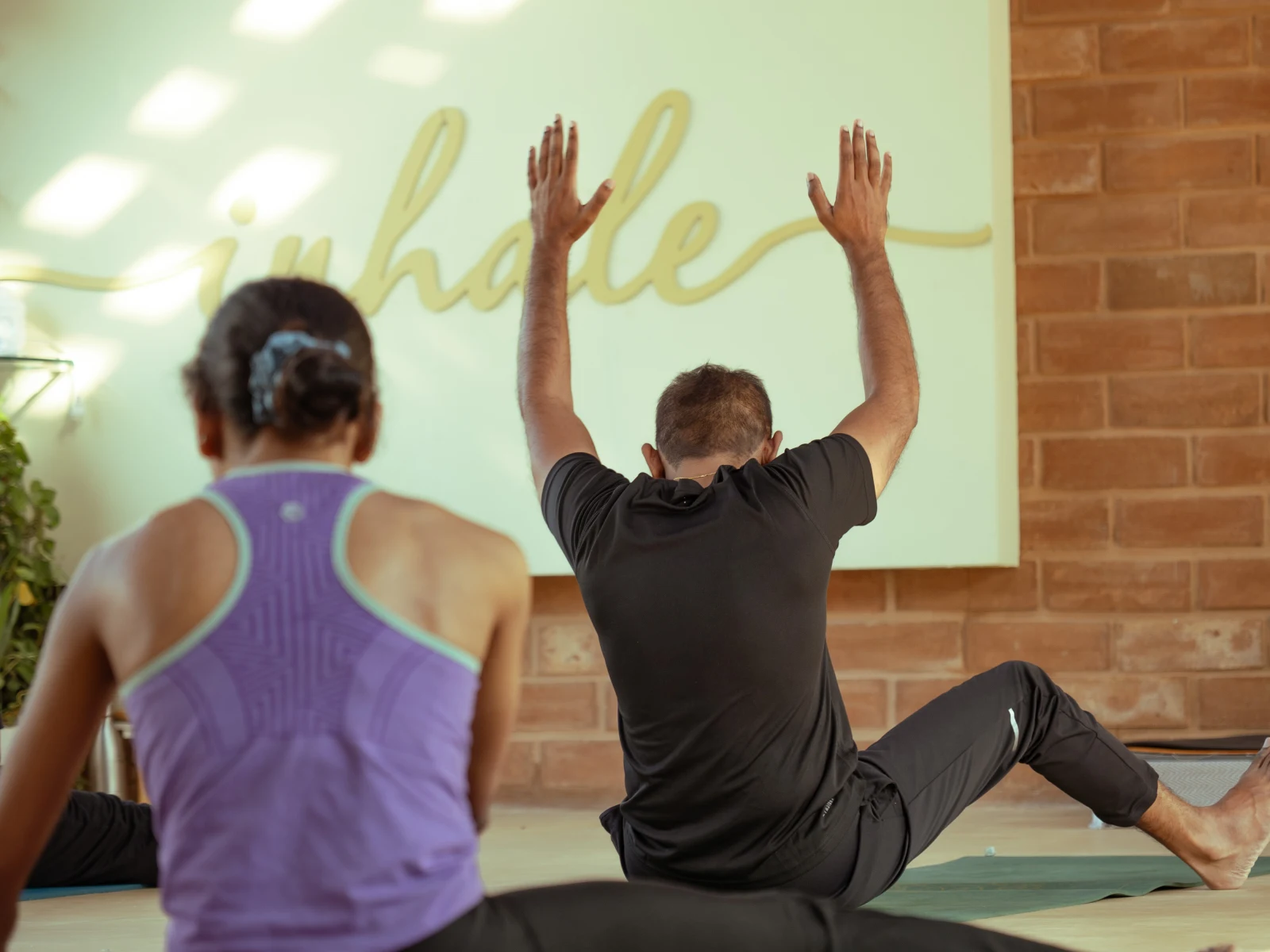
Yoga After 50 — Why It’s Not Too Late and What to Expect in Your First Class
Key Takeaways
- This article covers actionable guidance from Absolute Yoga's certified instructors.
- Topics include yoga practice, breathwork (pranayama), flexibility, mindfulness, and stress relief.
- Suitable for beginners and regular practitioners seeking structured yoga in Bangalore.
- Absolute Yoga offers in-studio, online, and aerial yoga classes from HRBR Layout, Kalyan Nagar.
The most common thing people say when they first contact Absolute Yoga in their fifties or sixties is a variation of: âIâve always wanted to try yoga but Iâve left it too late.â
They have not.
The research on yoga and ageing is unambiguous: yoga produces measurable, meaningful benefits at every stage of adult life, and the older the practitioner, the more pronounced many of the benefits become. The things yoga addresses most directly â balance, bone density, joint mobility, cognitive sharpness, and nervous system regulation â are the exact things that decline most significantly without consistent physical practice after 50.
Starting yoga at 55 or 65 is not a consolation prize. For many people, it is the practice that changes the trajectory of their ageing.
What the Body Does After 50 and What Yoga Addresses
Bone density
Bone density peaks in the late twenties and declines from approximately 35 onwards. After menopause in women and testosterone reduction in men, this decline accelerates. Low bone density (osteopenia progressing to osteoporosis) is associated with fragility fractures â particularly of the hip, spine, and wrist â that can be life-altering in later life.
A 2015 study published in Topics in Geriatric Rehabilitation found that yoga practice improved bone density markers in postmenopausal women after twelve months of consistent practice. The weight-bearing poses â standing postures, balancing poses, gentle backbends â apply a mechanical load that stimulates bone remodelling. Yoga is not a replacement for medical management of osteoporosis, but it is one of the more effective non-pharmacological interventions for supporting bone health.
Balance and fall prevention
Falls are the leading cause of injury-related death in adults over 65 in India, according to the National Institute of Epidemiology. The ability to balance depends on the integration of three systems: vision, vestibular (inner ear), and proprioception (body position sense). All three systems decline with age if not actively maintained.
Yoga in Bangalore is one of the most effective evidence-based interventions for improving balance in older adults. A 2012 meta-analysis in Ageing Research Reviews found that yoga significantly reduced fall risk in older adults across 15 studies. The mechanism is direct: yoga poses that challenge balance â Vrksasana (Tree Pose), Virabhadrasana III (Warrior III), Ardha Chandrasana (Half Moon) â train the proprioceptive and vestibular systems in a safe, progressive way.
Joint mobility and arthritis management
Joint cartilage requires movement to receive nutrients. Sedentary ageing is one of the primary drivers of accelerating joint degeneration. Gentle yoga provides the range-of-motion stimulus the joints need without the high-impact load of running or jumping.
The Arthritis Foundation in the United States has formally endorsed yoga as a beneficial complementary practice for both osteoarthritis and rheumatoid arthritis, noting that it reduces pain, stiffness, and tenderness in affected joints with consistent practice.
Cognitive function
A 2014 study from UCLA found that a three-month Kundalini yoga intervention (which includes breathwork and meditation alongside asana) produced significant improvements in memory, mental processing speed, and mood in adults over 55. The researchers noted that the combined physical, breathwork, and attention-training components of yoga appear to produce more comprehensive cognitive benefits than single-modality interventions like walking or memory training alone.
What to Expect in Your First Class â If You Are Over 50
You will be modified, not excluded
A well-trained yoga teacher in HRBR Layout knows that a studentâs chronological age tells them almost nothing about their physical capacity. What matters is the individualâs current mobility, strength, balance, and any relevant health history.
At Absolute Yoga in Kammanahalli, our teachers work with students in their fifties, sixties, and seventies regularly. Every pose has modifications, support options, and prop variations. A student who cannot kneel on the floor due to knee replacement, or who needs to avoid certain spinal flexions due to osteoporosis, is not doing a lesser version of yoga. They are doing the version appropriate to their body at this moment.
Soreness is normal; pain is not
First classes will produce some muscular soreness in the following day or two, particularly in the hips, hamstrings, and shoulders. This is normal and resolves with continued practice. What you should not experience is sharp joint pain, radiating pain, or significant discomfort during poses. If you do, tell the teacher immediately.
Progress is not linear or fast â and thatâs fine
The rate of physical adaptation after 50 is slower than in younger practitioners. Connective tissue responds more slowly. Balance improves gradually. This is not a reason for frustration â it is a reason for patience. The students at Absolute Yoga who have maintained the most meaningful long-term transformations are often those who started later in life, precisely because they approached the practice without the performance urgency that younger students sometimes bring.
What to Tell Your Doctor Before Starting
Most adults over 50 can begin a gentle yoga practice without medical clearance, particularly if their doctor is aware of the plan. However, there are specific conditions where it is essential to inform both your doctor and your yoga teacher before starting:
- Osteoporosis or osteopenia â certain spinal flexion movements need modification
- Recent joint replacement â range of motion restrictions apply
- Glaucoma â inversions raise intraocular pressure and should be avoided
- Recent cardiac events â intensity and breathwork need specific adaptation
- Uncontrolled hypertension â some inverted poses temporarily raise blood pressure
None of these conditions is a reason to avoid yoga. There are reasons to practise with a teacher who knows your situation.
If you are in Bangalore â whether in Kalyan Nagar, Kammanahalli, Horamavu, or the wider north of the city â and thinking about starting yoga at any age, a free trial class in Bangalore is a low-commitment way to experience the practice and meet the teachers. Book at wa.link/a15eyp. If coming to the studio is not possible, our live online yoga classes are also fully accessible for older beginners with modifications.
Frequently Asked Questions
Is yoga safe for people with osteoporosis?
Yes, with specific modifications. Students with osteoporosis should avoid deep spinal flexion (rounding forward with a curved spine), extreme spinal rotation, and poses that place significant compressive load on the vertebrae. Standing poses, gentle backbends, and balance work are typically safe and beneficial. It is essential to inform your teacher of your diagnosis so they can adapt poses accordingly throughout class.
I have had a knee replacement. Can I still do yoga?
In most cases, yes â with modifications. The typical restriction after knee replacement is deep flexion (bending the knee beyond 90 degrees) and high-impact load. Most yoga poses can be adapted to work within these limits. You should consult your orthopaedic surgeon about the specific range of motion restrictions before starting, and share those details with your yoga teacher on your first visit.
How many times a week should a beginner over 50 practise yoga?
Two to three times per week is the recommended starting point. This provides enough frequency for adaptation to occur without overloading joints and connective tissue that need more recovery time than in younger practitioners. As the body adapts over four to six weeks, a fourth session can be added if desired. Consistency over six months matters far more than frequency in any given week.
About the Author
Trupti Rathi is the Founder and Principal Yoga Teacher at Absolute Yoga, Kalyan Nagar, Bangalore. With over a decade of teaching experience and a background spanning Hatha, Ashtanga, Yin, aerial yoga, and pranayama, she has guided hundreds of students â from complete beginners to seasoned practitioners â through sustainable, alignment-led yoga practice. She continues to study, teach, and refine her approach at the studio in HRBR Layout and through live online classes.
Absolute Yoga · 3C, 812, 3rd Cross Rd, HRBR Layout 1st Block, Kalyan Nagar, Bengaluru â 560043 · +91 80955 10108