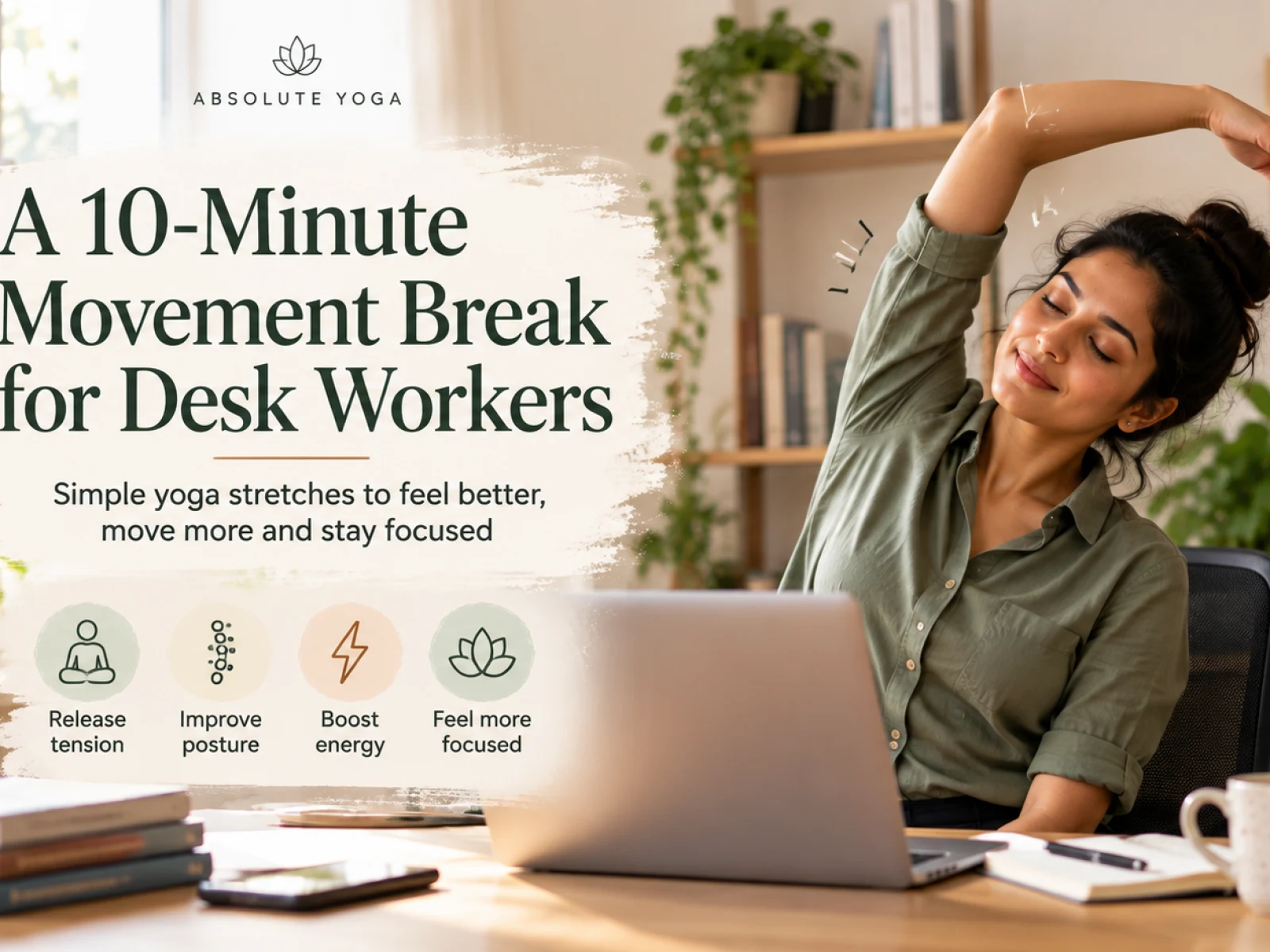
10-Minute Movement Break for Desk Workers: A Simple Desk Yoga Guide
Key Takeaways
- This article covers actionable guidance from Absolute Yoga's certified instructors.
- Topics include yoga practice, breathwork (pranayama), flexibility, mindfulness, and stress relief.
- Suitable for beginners and regular practitioners seeking structured yoga in Bangalore.
- Absolute Yoga offers in-studio, online, and aerial yoga classes from HRBR Layout, Kalyan Nagar.
Why a 10-Minute Movement Break Can Be Useful
Long periods at a desk can leave you feeling stiff, restless or mentally stuck. A short movement break is not a replacement for regular physical activity, strength work or a full yoga class. It is a practical interruption to sitting and a way to check in with your body during the workday.
The most useful desk break is simple enough to happen. If your only option feels like changing clothes, rolling out a mat and following a 45-minute video, you may postpone it until the day is over. A short sequence beside your chair lowers that barrier. You can use it between meetings, after finishing a task or when you notice that you have been sitting for a long stretch.
Movement should not be framed as a cure for every discomfort caused by desk work. Persistent pain, numbness, weakness, dizziness or symptoms that worry you deserve assessment from an appropriate health professional. The sequence below is general movement guidance, not a diagnosis or treatment plan.
Before You Begin: Set Up a Safe Break
Move your chair back enough to stand comfortably and make sure the floor is not slippery. Wear clothing that allows movement. If you are using a wheeled chair, keep it stable or use a fixed surface for support. Move slowly, breathe normally and avoid forcing any range of motion.
Keep the effort gentle. The goal is to change position and move with attention, not to turn a work break into a strenuous workout. Stop if a movement causes sharp pain, dizziness, tingling or symptoms that feel unusual. Adapt the range or skip an exercise that does not feel right for you.
People with an injury, balance concerns, recent surgery, pregnancy-related considerations or a health condition may need individual guidance before trying new movements. If you are unsure what is appropriate, consult a qualified clinician or instructor. A break should leave you feeling more comfortable, not pressured to push through symptoms.
The 10-Minute Desk Yoga Sequence
Minute 1: Reset your posture. Sit with both feet supported and let your shoulders settle. Notice whether you are leaning toward the screen or holding your breath. Lengthen through the spine without stiffening or forcing your shoulders back. Take a few comfortable breaths.
Minute 2: Gentle shoulder rolls. Slowly roll the shoulders up, back and down, then reverse direction if comfortable. Keep the movement small and smooth. Avoid shrugging aggressively or trying to create a stretch by pulling the shoulders into an uncomfortable position.
Minute 3: Neck awareness. Turn your head gently to look a little to one side, return to centre, and repeat on the other side. You can also make a small nod if comfortable. Do not circle the neck forcefully, pull on the head or push into pain.
Minute 4: Seated side reach. Sit tall and raise one arm only as far as comfortable. Lean slightly to the opposite side without collapsing forward or twisting. Return to centre and switch. Keep both sitting bones grounded where possible and breathe normally.
Minute 5: Wrist and hand movement. Open and close the hands slowly, spread the fingers, and gently rotate the wrists within a comfortable range. If you type or use a mouse for much of the day, use this minute as a reminder to release your grip and let your hands rest.
Minute 6: Seated spinal movement. Place your hands on your thighs. As you breathe in, gently broaden the chest and sit a little taller; as you breathe out, soften the back slightly. Keep the movement modest and avoid forcing the lower back into a deep arch or rounding.
Minute 7: Stand and shift weight. Stand up slowly, using the chair or desk for support if needed. Place feet comfortably apart and shift weight gently from one foot to the other. Keep your knees soft and stay near a stable surface if balance is uncertain.
Minute 8: Gentle calf raises. Holding a stable chair or desk, lift the heels a small distance and lower them with control. Repeat at an easy pace. Skip this movement if it affects your balance or causes discomfort. The aim is gentle movement, not fatigue.
Minute 9: Easy standing reach. Reach both arms upward only as far as feels comfortable, then lower them. You can keep the hands at shoulder height or perform the movement seated if standing is not suitable. Avoid holding your breath or pushing into a painful range.
Minute 10: Return to work deliberately. Stand or sit comfortably, take a few normal breaths and decide what task you will return to. Notice whether you feel less fixed in one position. You do not need to measure a dramatic change for the break to be worthwhile.
How to Fit Movement Breaks Into a Real Workday
Attach the break to an existing event rather than relying on memory alone. For example, take it after two meetings, when you finish a long report section, or before lunch. If reminders help, use a calendar prompt that is realistic for your work pattern. Do not set so many alerts that you start ignoring all of them.
Choose a trigger that matches your day. Someone in back-to-back calls may need a break between meetings. Someone doing focused work may prefer to stand after completing a defined task. If you work from home, keep the space clear enough that you can move without rearranging the room each time.
Short breaks can complement broader movement habits. The WHO guidance on physical activity explains why regular physical activity matters for health, while advice about reducing sitting can help you think beyond one stretch sequence. A ten-minute break is a useful starting point, not a reason to ignore the rest of your dayâs movement.
What Desk Yoga Can and Cannot Do
Gentle movement may help you change position, notice tension and interrupt long periods of stillness. It can also provide a clear mental boundary between tasks. But a desk routine cannot guarantee that neck, shoulder or back pain will disappear, and it cannot correct every ergonomic or medical issue.
If discomfort repeatedly returns, examine the whole setup: screen height, chair support, keyboard and mouse position, task duration, workload, breaks and stress. Some changes may require workplace adjustments or professional advice. Avoid assuming that every symptom is caused by poor posture or that one ideal posture must be held all day.
If you experience back discomfort, our guide to yoga for back pain in Bangalore provides broader context, but it should not replace assessment for persistent or severe symptoms. A class with an instructor can help you learn movement options, while a clinician can assess symptoms that need medical attention.
When a Full Yoga Class May Help More
A desk break is designed for convenience. A full class gives more time for instruction, progression, breathing and a wider range of movement. It can also provide a scheduled pause that is harder to protect when you are working alone.
If you want direct feedback, look for in-studio yoga classes and ask which class is appropriate for your experience. If travel makes attendance difficult, live online yoga classes may fit your schedule. Confirm current formats and timings before joining.
You do not have to choose between the two. A brief workday movement break can complement a regular practice. The key is to give each one a realistic job: desk breaks interrupt sitting; classes provide structured practice and instruction; other forms of physical activity contribute to your wider movement routine.
A Simple Weekly Plan
Start with one movement break on three workdays. Once it feels easy to remember, add another break or extend the sequence only if it remains comfortable. You might do the full ten minutes at lunch and a shorter two-minute stand-and-move break at another point in the day.
At the end of the week, ask whether the trigger worked and whether any movement felt uncomfortable. Change the sequence if needed. The routine should fit the person doing it, not force every person to follow identical movements. If you miss a break, take the next reasonable opportunity rather than treating the day as lost.
For people in Bengaluru who prefer a guided routine outside work, the yoga classes in HRBR Layout page has current studio information. You can also explore a gentle practice at home, but remember that a short desk sequence and a full yoga session serve different purposes.
The Takeaway
The best desk movement routine is not the most complicated one. It is a short, comfortable sequence that helps you interrupt sitting and reconnect with how your body feels. Keep the movements gentle, use a reliable trigger and stop when something feels wrong.
Ten minutes will not solve every problem associated with desk work, and it does not need to. Treat it as one small part of a healthier workday, alongside suitable ergonomics, regular activity, recovery and professional advice when symptoms persist.
Frequently Asked Questions
Is 10 minutes of desk yoga enough?
It can be a useful movement break, but it does not replace all physical activity or a full yoga practice. Use it to interrupt sitting and build from your current level.
Can I do desk yoga in office clothes?
Usually, gentle seated and standing movements can be done in comfortable work clothes, provided they allow movement and the space is safe.
Do I need a yoga mat for desk yoga?
No. The sequence is designed for a chair and a small clear space. Use a stable chair or desk for support when needed.
Can desk yoga cure neck or back pain?
No routine can guarantee that. Persistent, severe or unusual symptoms should be assessed by an appropriate health professional.
How often should I take a movement break?
There is no single schedule that fits everyone. Break up long periods of sitting when practical and follow any workplace or medical guidance relevant to you.
Can I do these exercises during a video call?
Some gentle movements may be possible, but prioritise safe positioning and attention. It is better to take a proper short break when you can.
What if stretching makes me uncomfortable?
Stop that movement, reduce the range or skip it. Do not force a stretch. Seek professional advice if discomfort persists or concerns you.
Is desk yoga the same as chair yoga?
They overlap, but desk yoga usually refers to brief movements during work, while chair yoga can be a more structured class using a chair for support.
Can a desk movement break improve concentration?
Changing position can provide a useful pause, but effects vary. Treat it as a practical reset rather than a guaranteed productivity technique.
Can I combine desk yoga with regular classes?
Yes. Brief work breaks and structured classes have different purposes and can complement one another if the total routine suits your needs.